










The association warns that the departure of regulated operators could reduce consumer protection and make suspicious betting harder to detect. H2 Gambling Capital estimates that Brazil’s unlicensed market could reach R$42 billion.
The International Betting Integrity Association (IBIA) has warned that Brazil’s ban on fixed-odds betting and online gaming could reverse regulatory progress and weaken mechanisms designed to prevent match-fixing. In an analysis by CEO Khalid Ali, the association examines the potential consequences for sports integrity, consumer protection, and the regulated market.
On 25 September 2026, Brazil imposed a nationwide ban on fixed-odds betting, including sports betting and online gaming, just 21 months after opening its regulated market. The measure is being implemented while Congress considers whether it should become permanent.
Regulatory Progress at Risk
In less than two years, Brazil authorised more than 80 operators, introduced customer identification requirements, took action against illegal betting websites and associated payment channels, and established a centralised self-exclusion system.
For sports integrity, licensed operators were required to monitor suspicious betting activity, report potential concerns, and cooperate with national and international sports integrity monitoring organisations.
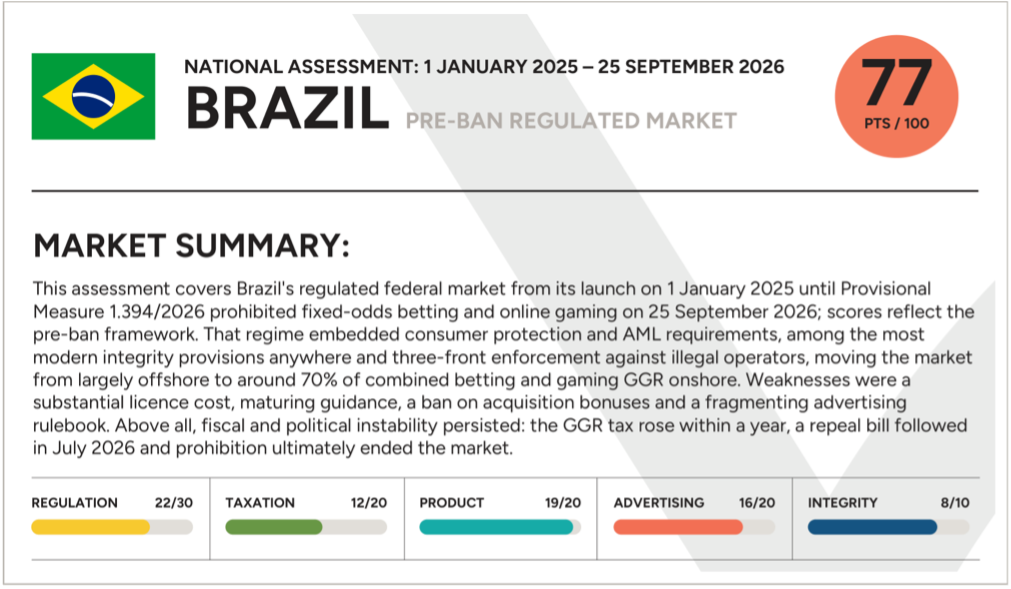
IBIA’s comparative assessment of regulatory frameworks gave Brazil a score of 77 out of 100, placing it above Portugal, at 68, and below Great Britain, at 86.
The association argues that one of the main benefits of a regulated market is the intelligence it generates. Suspicious betting patterns can be identified, assessed, and shared with regulators, sports bodies, and law enforcement. If betting activity moves outside the licensed system, access to this information could be significantly reduced.
Illegal Market Could Reach R$42 Billion
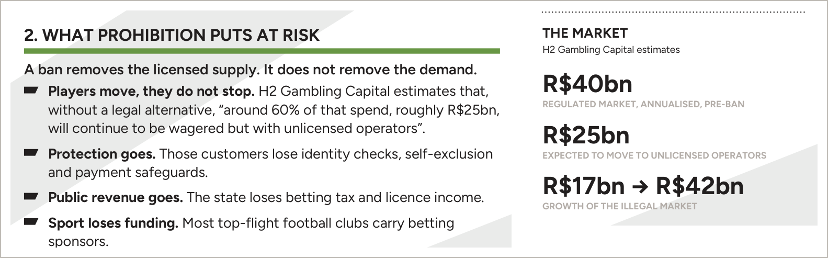
A ban does not necessarily eliminate demand for betting. According to estimates from H2 Gambling Capital, around 60% of the activity currently served by Brazil’s regulated market, equivalent to approximately R$25 billion, could migrate to unlicensed operators if the legal alternative disappears.
On this basis, the illegal market could grow from around R$17 billion to approximately R$42 billion.
IBIA warns that this shift could also expose consumers to operators beyond the reach of Brazilian regulators, without the same customer identification requirements, responsible gambling safeguards, or reporting obligations. Authorities would also lose access to information that licensed operators are required to provide.
Suspicious Betting Alerts and Sports Integrity
IBIA reported 25 suspicious betting alerts involving Brazilian sports in 2025, the first full year of the regulated market. This compares with an annual average of 11 alerts between 2021 and 2024.
According to the association, the increase should not be interpreted as evidence that regulation made Brazilian sport less safe. Instead, it is consistent with improved detection and reporting in a market where licensed operators were required to identify and report suspicious activity.
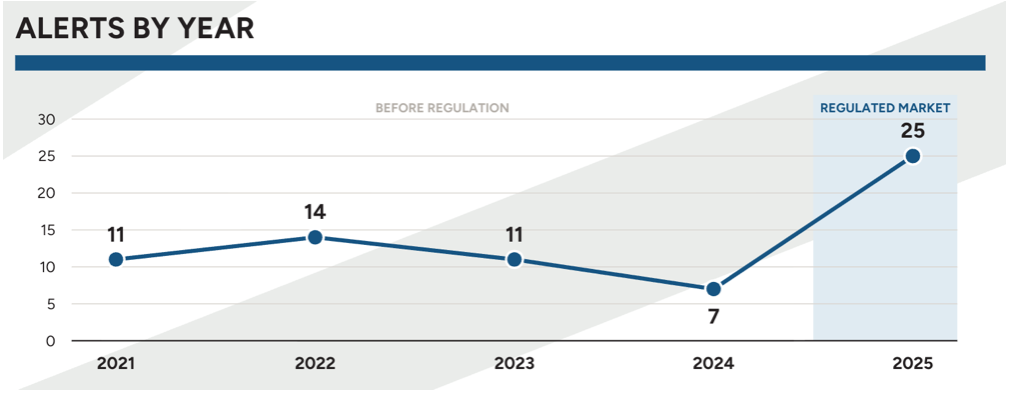
IBIA also emphasises that alerts do not directly measure the scale of match-fixing. They reflect activity detected and reported by monitoring systems. A decline in alerts following a ban would therefore not necessarily indicate less suspicious betting; it could instead signal reduced visibility into those activities.
IBIA Calls for a Review and Stronger Regulation
The association argues that challenges involving advertising, consumer protection, operator oversight, and enforcement against illegal providers require regulatory improvements rather than the abandonment of the existing framework.
IBIA is urging Brazil’s Congress to reconsider the ban and assess the market’s future through the ordinary legislative process, supported by open dialogue with the industry, a clear risk assessment, and a published impact assessment.
It also calls for existing suspicious betting monitoring and reporting mechanisms to be preserved, cooperation with authorities to continue, and enforcement efforts to focus on unlicensed operators. Gambling-related harms, it adds, should be addressed through targeted measures within the regulated market.
For IBIA, the priority should be to strengthen the safeguards Brazil has developed rather than dismantle the regulatory framework that makes them possible.
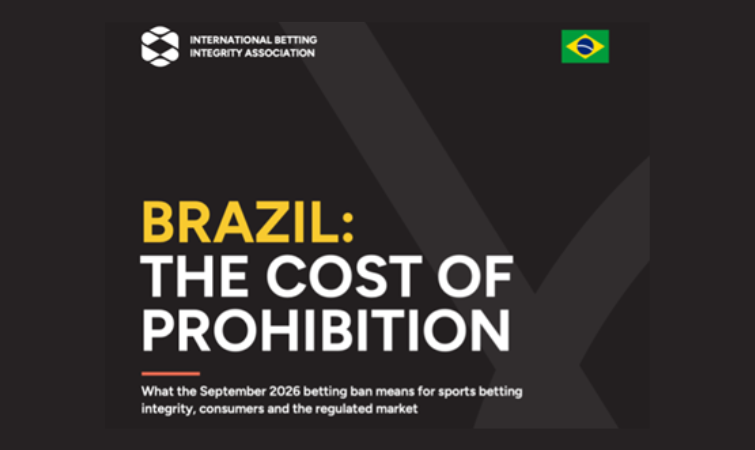
The full report, Brazil: The Cost of Prohibition, is available through IBIA.