






The company aims to enable games to be built once and deployed across multiple ecosystems, while expanding its proposition to connect technology, content and distribution.
SlotMatic, a technology platform operating under the Game Studio as a Service (GSaaS) model, has introduced a new gaming architecture designed to support the development and deployment of casino games across multiple gaming ecosystems.
The approach is based on a simple principle: “Build Once. Distribute Everywhere”, allowing a game to be developed once and progressively deployed across different engines and distribution networks.
As part of this evolution, the company has also introduced SlotMatic Operator Hub, a broader B2B proposition designed to connect operators with technology, content and distribution infrastructure through a single ecosystem.
A new approach to game distribution
Traditionally, launching a game across different platforms may require new SDKs, integration processes, QA testing and multiple versions of the same title.
SlotMatic is developing a different model: one game, one technology layer and multiple engines.
Its architecture separates the core game from much of the engine-specific infrastructure required for deployment. Through its integration layer, SlotMatic aims to manage the mathematical conversion, configuration and API communication required by compatible target environments, while keeping the core game substantially unchanged.
The goal is to turn each new engine integration into reusable infrastructure for the wider compatible portfolio, rather than creating a separate technical project for every title.
Stake Engine: the first technology test
The first implementation of the architecture has been completed for Stake Engine, alongside native deployment through SlotMatic’s RGS.
According to the company, initial testing has successfully reproduced the core game functionality and feature behavior within the new environment.
SlotMatic is now expanding the approach across its portfolio while evaluating additional gaming infrastructures for future integrations.
Domenico Vacchiano, who led the technical implementation, said:
“We are not rebuilding the game for every engine. We integrate the engine once and then make that infrastructure available to all compatible games.”
He added that the core game remains unchanged while SlotMatic manages the mathematical conversion, configuration and communication with the target environment.
Automation and efficiency for game studios
A key component of the architecture is SlotMatic’s automated mathematical conversion process, designed to adapt a game’s mathematical configuration and related features to the requirements of a compatible engine.
For SlotMatic, this approach can help reduce code duplication, integration time, technical maintenance, QA complexity and the need to manage multiple versions.
The company believes this could allow studios to focus more resources on the elements that differentiate their products, including mathematics, mechanics, graphics, UX, branding and intellectual property.
Francesco Maddalena said that each additional engine could potentially expand the addressable market for compatible games.
“For studios, this means greater reach without repeating the same development process. For operators, it means faster access to more content. The real value comes when technology, content and distribution work together.”
From RGS to broader infrastructure
The development also expands SlotMatic’s positioning beyond its role as a game studio and Remote Gaming Server (RGS) provider.
The company aims to become an engine-independent technology layer connecting game creators, studios, IP owners, operators and distribution networks.
Charles Herisson said:
“We are moving from a game-by-game integration model to an infrastructure model.”
According to Herisson, each new connection can potentially increase the value of the infrastructure already in place, allowing new engines to benefit multiple games and new studios to access different distribution opportunities.
SlotMatic Operator Hub expands the proposition
The next stage of the strategy is SlotMatic Operator Hub, a B2B proposition designed to give operators access to technology, content and infrastructure without requiring them to build every component of a gaming ecosystem internally.
Operator Hub is intended to provide access to resources including development infrastructure, SlotMatic titles, third-party studio content, multi-engine compatibility, branded and exclusive games, mathematical configuration, integration APIs, deployment infrastructure, tournaments, gamification and player engagement tools.
This would allow operators to focus more on their brand, customer experience and commercial strategy, while SlotMatic provides part of the underlying technology infrastructure.
Technology, content, distribution and audience
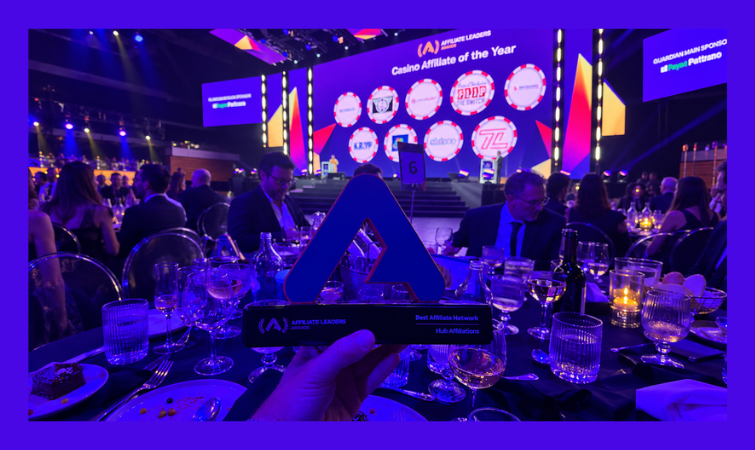
The proposition gains another dimension through SlotMatic’s partnership with Hub Affiliations, which, according to the company, can potentially add a network of more than 1,700 affiliates to the ecosystem.
The model brings together four elements:
Technology + Content + Distribution + Audience
For SlotMatic, this represents an evolution beyond simply supplying games to an operator.
Charles Herisson commented:
“Technology alone is not the end goal. What becomes really powerful is when technology, content and distribution work together.”
He added:
“SlotMatic Operator Hub is our vision to provide the technology layer, connect operators with content and studios and, through partnerships such as Hub Affiliations, potentially connect that ecosystem with a significant affiliate distribution network.”
New opportunities for studios and IP owners
The architecture is also designed to expand access to gaming technology for external studios, independent developers, media companies and intellectual property owners.
Under this model, an IP owner can bring its brand, a studio can provide creative development, SlotMatic can provide the technology infrastructure, and an operator can provide the gaming environment and customer base.
The company believes this model could help turn existing brands and audiences into new gaming products.
In terms of content, and subject to commercial agreements, technical approvals and platform requirements, SlotMatic expects titles from Pidiots Labs and Lucky Duck Studios to be available through Stake Engine alongside their native deployment on SlotMatic.
The company is also evaluating additional gaming infrastructures for future integrations.
The next stage: expanding the ecosystem
SlotMatic’s roadmap focuses on four main priorities: expanding multi-engine compatibility across its portfolio, onboarding external studios and IP owners, integrating additional relevant engines and platforms, and developing Operator Hub as a broader B2B proposition combining technology, content and distribution infrastructure.
With Stake Engine serving as the first technology test, SlotMatic aims to move toward a model in which games can be designed from the outset for multi-engine and multi-operator deployment.
The company’s vision is evolving from “One Game. Multiple Engines” toward “One Infrastructure. Multiple Opportunities”, with the goal of connecting content creation and distribution more efficiently across different gaming ecosystems.