










Discover the consulting project that earned Dr. Renzo Escalante further recognition at The Bizz Award Projects 2026.
The iGaming industry faces a decisive challenge: how can businesses remain profitable, strengthen relationships with players and, at the same time, protect their well-being?
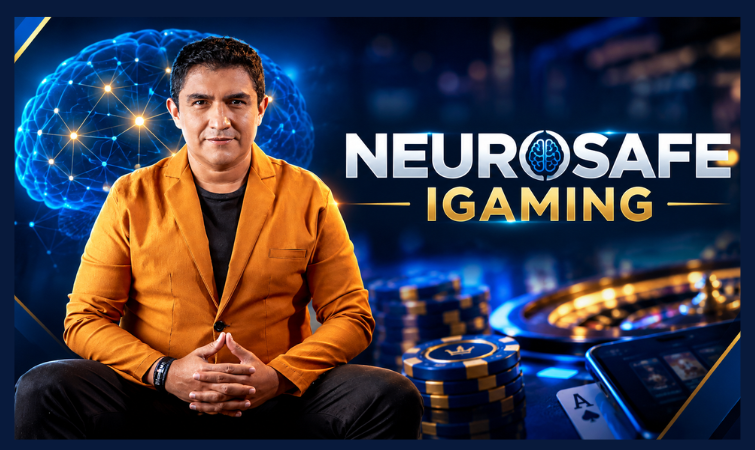
The answer may lie in a new way of understanding human behavior. This is the premise behind NEUROSAFE iGAMING, a consulting project developed by researcher and Doctor Honoris Causa Renzo Escalante, which was recognized as a winning project at The Bizz Award Projects 2026.
The proposal brings together neuroscience, behavioral economics, data analysis and strategic management to move beyond the traditional business model. Rather than focusing solely on optimizing player activity, it seeks to understand the quality, sustainability and safety of the relationship between players and platforms.
In a market where user acquisition often accounts for a significant share of commercial investment, NEUROSAFE iGAMING raises a different question: what if companies could better understand why people play, anticipate potential risk signals and design experiences that encourage lasting relationships without relying on potentially harmful behaviors?
The importance of this question goes beyond technological innovation. It is linked to financial sustainability, consumer trust, corporate reputation and the responsibility of an industry that must carefully manage its impact on people.
We spoke with its creator, Renzo Escalante, who also serves as CEO of Clases Play.
What is NEUROSAFE iGAMING?
NEUROSAFE iGAMING proposes integrating scientific knowledge of human behavior into the commercial, technological and operational decisions of online gambling companies.
The approach is based on a central idea: player behavior should not be analyzed solely as an opportunity for monetization, but also as a source of information to improve the user experience, identify risks and build sustainable relationships.
To achieve this, the proposed implementation is structured around five strategic dimensions:
1. Neuroscience and behavioral economics
This dimension examines how attention, emotions, expectations, rewards and cognitive biases influence decision-making. It allows companies to review digital experiences through the lens of human behavior without assuming that all players respond in the same way.
2. Behavioral analytics and artificial intelligence
This dimension identifies patterns such as unusual changes in deposits, prolonged sessions, increased playing frequency or repeated attempts to recover losses. These indicators can help detect behavioral changes and prioritize preventive interventions.
3. Neuro-safe experience design
It evaluates notifications, promotions, rewards, messages and loyalty mechanisms to prevent them from exploiting psychological vulnerabilities. The goal is to offer engaging experiences without encouraging impulsive gambling or making it difficult for people to stop.
4. Player protection and responsible gambling
This dimension incorporates time and spending limits, breaks, self-exclusion, timely messages and support protocols. Interventions should be proportionate to the level of risk, transparent and focused on protecting users.
5. Sustainable profitability and strategic management
It connects user experience quality, harm prevention, healthy retention and commercial efficiency with business performance indicators. In this way, player protection becomes an integral part of business management rather than an isolated initiative.
According to Escalante, these five dimensions form the proposed framework for implementing the project, which includes a scientific case study described as having achieved highly significant transformative results.
What is the science behind the proposal? Are there figures that call for a rethink of the current model?
The importance of NEUROSAFE iGAMING becomes clearer when examining the available data on the industry and research into player behavior.
Three key figures are highlighted in the proposal:
- 1.2% of the global adult population is reported to experience gambling disorder, according to the World Health Organization (WHO). The organization also highlights that gambling-related harm can extend to families and wider communities.
- US$700 billion by 2028 is cited as a projected figure attributed to the WHO. The scope and source of this projection should be confirmed.
- 68 studies in 2026 are cited as being listed in a WHO repository on advanced technologies and safer gambling. The research reportedly includes behavioral monitoring, predictive models, risk classifiers, and tools such as spending limits and self-exclusion.
These figures relate to different dimensions of the issue: the prevalence of gambling-related harm, the economic scale of the industry and the development of technological research. Together, they point to the need for approaches that address these challenges, including the principles proposed by NEUROSAFE iGAMING.
Renzo, how would this model change player management on an iGaming platform?
Imagine an online sports betting operator in Latin America that uses a traditional CRM and loyalty program.
The commercial system identifies players who increase their deposits, place more bets and return frequently. Typically, these behaviors may trigger bonus campaigns, personalized promotions or outreach from the VIP team.
However, an increase in activity can have very different explanations. It may reflect greater interest in a sporting event or, in some cases, a potential loss of control.
NEUROSAFE iGAMING proposes adding an extra layer of analysis and protection, adapted to the circumstances of each Latin American market, through four steps:
1. Detect the change
The model compares recent activity with the individual player’s historical behavior. An increase in deposits or session duration triggers a review, not an automatic diagnosis.
2. Change the commercial response
Instead of sending a bonus designed to increase spending, the system temporarily pauses promotional incentives and presents tools to help players manage their time and budget, encouraging more conscious gambling and a healthier long-term relationship.
3. Intervene responsibly
If warning signs persist or accumulate, the operator’s established protocol is activated. This may include non-commercial communication, human review where appropriate, protective limits and access to support resources.
4. Measure the results
The company evaluates whether interventions improve the use of limits, reduce risky behavior patterns and maintain user trust. Success is not measured by additional spending from people showing signs of vulnerability.
Where does the innovation lie?
The innovation is not simply about incorporating artificial intelligence. It is about changing the objective behind business decisions.
In the conventional model, increased activity may be interpreted as an opportunity for monetization. Under a neuro-safe model, the same signal is considered in context and may lead to a protective intervention, with the aim of supporting a safer long-term relationship.
This difference can influence CRM strategies, segmentation, loyalty programs, product design, customer service and risk management.
Scientific literature supports the potential of behavioral monitoring and digital interventions, while also highlighting that their effectiveness depends on how they are designed, implemented and evaluated. For this reason, the model must account for false positives, respect privacy and provide clear review mechanisms.
What could companies achieve by implementing NEUROSAFE iGAMING?
The potential benefits extend beyond responsible gambling and reach several areas of the business.
An experience that helps players make informed decisions, manage their spending and access support can strengthen trust in a brand. This should be assessed through surveys, complaints, satisfaction levels and perceptions of safety.
Risk teams may be able to prioritize cases requiring attention and apply proportionate interventions before certain behaviors escalate. Effectiveness must be assessed through validated outcomes and human review.
Segmentation would no longer depend exclusively on a customer’s economic value, but would also incorporate suitability, risk and protection criteria. This can help prevent inappropriate promotions and allocate commercial resources more effectively.
Companies can also assess healthy retention, long-term customer value and reductions in player attrition associated with negative experiences. However, protection should not automatically be assumed to generate higher revenue. This remains a business hypothesis that must be evaluated according to each company’s circumstances.
Presented by Renzo Escalante, who also serves as CEO of Magic Touch Consulting, NEUROSAFE iGAMING sits at the intersection of three disciplines: behavioral science, business strategy and applied innovation.
For a consultancy of this kind, the opportunity lies in helping companies translate scientific knowledge into practical processes: what to measure, how to interpret signals, when to intervene, which commercial practices to review and how to demonstrate quantitatively whether the measures are working.
Recognition at The Bizz Award Projects 2026 marks a milestone for this proposed approach, in which a player is not simply a CRM record or a lifetime-value figure. A player is a person whose decisions may be influenced by expectations, emotions, context and reward mechanisms.
The ultimate goal is to build a more sustainable relationship across financial, commercial and human dimensions.