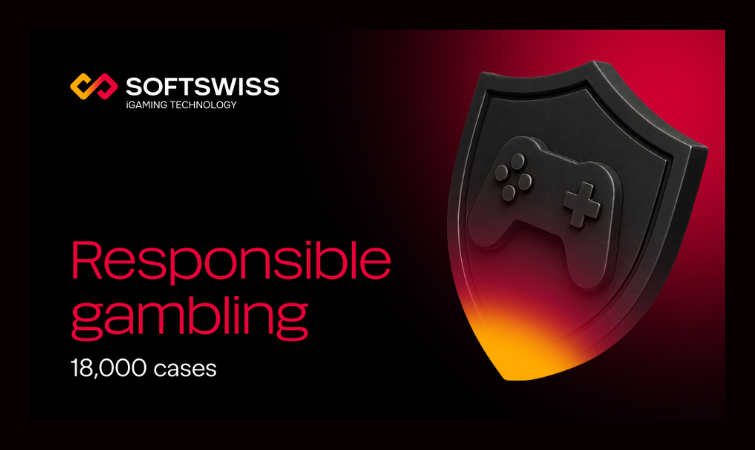













The Responsible Gambling team handled nearly 18,000 cases between 1 January and 16 November 2026, representing an increase of more than 8% compared with the same period last year. The company attributes this growth to greater player awareness and a growing willingness to seek support.
SOFTSWISS’s Responsible Gambling team handled nearly 18,000 cases between 1 January and 16 November 2026. These included self-exclusion requests, behavioral checks, proactive interventions and complaints related to responsible gambling measures.
The figure represents an increase of more than 8% compared with the same period in 2025. According to the team, this growth is driven by greater player awareness of their gambling habits and an increased willingness to seek guidance and support.
SOFTSWISS’s educational initiatives, the visibility of its safer gambling tools and proactive interventions may also be helping to reduce the stigma associated with asking for help.
“When players understand their behaviour and the safeguards available to them, customer interactions become more constructive. Instead of stepping in only after serious financial harm has occurred, we can work with players earlier to help prevent problems,” said Davit Lomidze, Responsible Gambling Compliance Specialist at SOFTSWISS.
iGaming as a Testing Ground for Consumer Protection Systems
The iGaming industry has developed a range of consumer protection measures, shaped in part by regulatory scrutiny and the implementation of operational safeguards. Today, many operators consider responsible gambling a core feature of their products and services.
In this context, SOFTSWISS identifies three industry practices that could also be adopted by other digital sectors.
One of them is identifying behavioral markers of harm. Many operators use machine learning models to detect patterns such as chasing losses, late-night play, the use of multiple payment methods and cancelled withdrawals. While some trading apps and cryptocurrency platforms already suggest cooling-off periods, iGaming models could help identify signs of potential distress and provide timely support more consistently.
Another practice is cross-platform self-exclusion. Systems such as GamStop in the UK and the Malta Gaming Authority’s (MGA) self-exclusion mechanism allow players to register once and be blocked from all participating licensed platforms within the relevant market. Similar systems could benefit consumers of e-commerce services, Buy Now, Pay Later (BNPL) providers and video games featuring microtransactions.
The third practice involves affordability checks. In certain markets, regulations require operators to assess players’ financial circumstances before allowing specific deposits, helping ensure that they do not commit more money than they can afford to lose. Similar safeguards could also be introduced by BNPL providers and card issuers before consumers take on multiple point-of-sale loans simultaneously.
Artificial intelligence is also playing an increasingly important role in coordinating tasks and identifying potential harm in real time. This technology allows responsible gambling teams to move beyond simply responding to requests for assistance and start anticipating warning signs, potentially intervening before players recognize that they are losing control.
“In terms of responsible gambling, iGaming isn’t just mature; it is serving as the beta-tester for the automated consumer protection systems that the rest of the digital economy will inevitably adopt,” Lomidze explained.
Responsible Gambling as a Key Factor in Player Trust
Responsible gambling measures also influence the decisions players make when choosing an operator. This was one of the topics discussed by SOFTSWISS during its LinkedIn Live panel, “2027 iGaming Trends: Turning Insights into Action”, focused on the company’s 2027 iGaming Trends report.
During the discussion, Pavel Kaplunov, Head of Content Marketing at SOFTSWISS, and Robin Harrison, Global Content Director at WorldGaming, shared findings from a 2026 Tonybet survey conducted in Canada. According to the results, 75% of players refuse to use unlicensed platforms.
Beyond licensing, the main factors influencing player trust include online reviews (53%), regulatory certification (43%) and responsible gambling compliance (41%).
These findings highlight how operating responsibly and sustainably helps build a level of trust that goes beyond simply holding a license.
The panellists also explored other factors shaping the industry’s future, including prioritizing player retention over broad bonus campaigns, making simplicity a premium product feature, helping players discover games through operators, affiliates and providers, and encouraging knowledge-sharing between iGaming and other digital industries.
The full panel recording is available free of charge on LinkedIn.